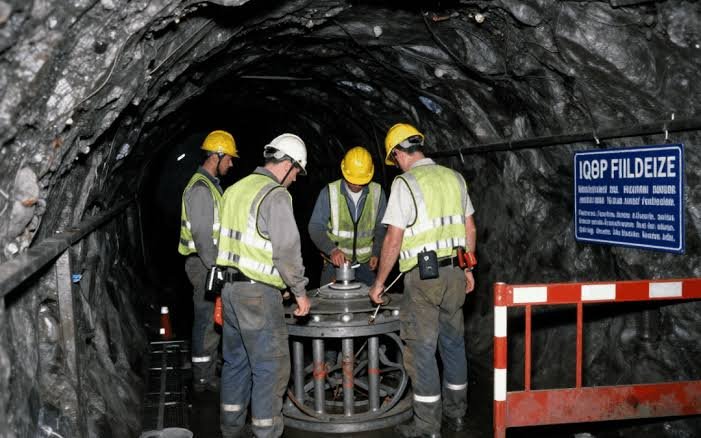
Mining companies face increasing pressure to maintain safe underground environments while improving production efficiency. Excavation activities can change natural rock conditions, creating unstable areas that require carefully planned reinforcement. Selecting suitable rock bolts mining solutions allows engineering teams to strengthen underground openings, manage fractured formations, and support more dependable mining infrastructure.
Understanding the Relationship Between Excavation and Rock Stability
Removing rock during mining changes the stress distribution around underground openings. Depending on the geological structure, this process can produce cracks, loose blocks, roof movement, and deformation along excavation walls.
The level of instability varies between mining locations. Strong rock formations may require relatively simple reinforcement, while heavily fractured or weak ground can demand multiple layers of ground support.
Geotechnical investigations help engineers identify these differences and develop reinforcement plans that reflect actual site conditions. Rock strength, discontinuity orientation, excavation dimensions, groundwater, and mining depth are among the important considerations.
Selecting Reinforcement According to Geological Conditions
There is no single anchoring system suitable for every underground mining operation. Different products provide different mechanical characteristics and levels of support.
Grouted Rock Bolts: These reinforcement elements use cementitious grout or resin to bond the bolt with surrounding rock. They are commonly used where reliable load transfer is required.
Friction-Based Anchors: These systems develop resistance through contact with the drilled hole. They can be useful in applications where their installation and load characteristics match the ground conditions.
Cable Bolts: Longer reinforcement elements are often considered for large underground openings, mining stopes, and areas requiring deeper anchorage.
Self-Drilling Anchor Systems: These products combine drilling and reinforcement functions through a hollow steel bar. Grout passes through the central opening, making the system useful in fractured or unstable formations where conventional drilling holes may collapse.
The final selection should be based on engineering calculations, site investigations, and applicable mining safety requirements.
Improving Productivity Through Appropriate Installation Planning
Efficient reinforcement planning can help mining teams coordinate excavation and ground support activities. Delays between excavation and support installation may allow unstable rock sections to loosen further.
For this reason, ground support should generally be installed as soon as practicable according to the approved mining sequence.
Self-drilling systems can offer installation advantages in certain difficult ground conditions because drilling and anchoring operations are integrated. Their hollow construction also provides a route for grout injection without requiring a separate conventional drilling rod to be replaced by an anchor.
However, installation efficiency depends on suitable drilling equipment, compatible accessories, correct grout preparation, and trained personnel.
Why Product Quality Should Never Be Overlooked
Reinforcement products must withstand the mechanical and environmental conditions expected underground. Several characteristics deserve attention during procurement:
- Steel strength: Mechanical properties should meet the requirements established by the engineering design.
- Dimensional accuracy: Consistent dimensions and thread quality help ensure compatibility with installation equipment.
- Corrosion resistance: Protective treatments may be necessary in areas exposed to aggressive groundwater or moisture.
- Accessory compatibility: Nuts, couplings, bearing plates, and drill bits should match the selected anchoring system.
- Quality documentation: Testing records and manufacturing specifications help buyers assess product suitability.
Evaluating these characteristics can reduce procurement problems and improve confidence in the selected reinforcement materials.
Monitoring Ground Support After Installation
Installing reinforcement is only one part of effective ground control. Underground conditions can change as mining operations advance, so regular inspections and monitoring remain important.
Mining engineers may use visual inspections, convergence measurements, extensometers, and specified load-testing procedures to evaluate ground behavior.
Monitoring results can help identify developing instability and determine whether additional reinforcement or changes to the support arrangement are necessary.
A documented inspection program also provides useful information for future excavation planning.
The Future of Underground Ground Support
Mining technology continues to evolve through improved materials, advanced drilling equipment, and more effective monitoring methods. Manufacturers are developing anchoring products with different strength characteristics and installation features to address increasingly complex underground conditions.
Combining suitable reinforcement technology with geological assessments and systematic monitoring can help mining companies make better engineering decisions.
Conclusion
Reliable underground mining depends on understanding geological conditions and selecting reinforcement systems that match project requirements. Product quality, installation planning, equipment compatibility, and continuous monitoring all contribute to effective ground control.
By adopting a well-designed reinforcement strategy, mining operators can improve excavation management and support the long-term stability of underground infrastructure.